
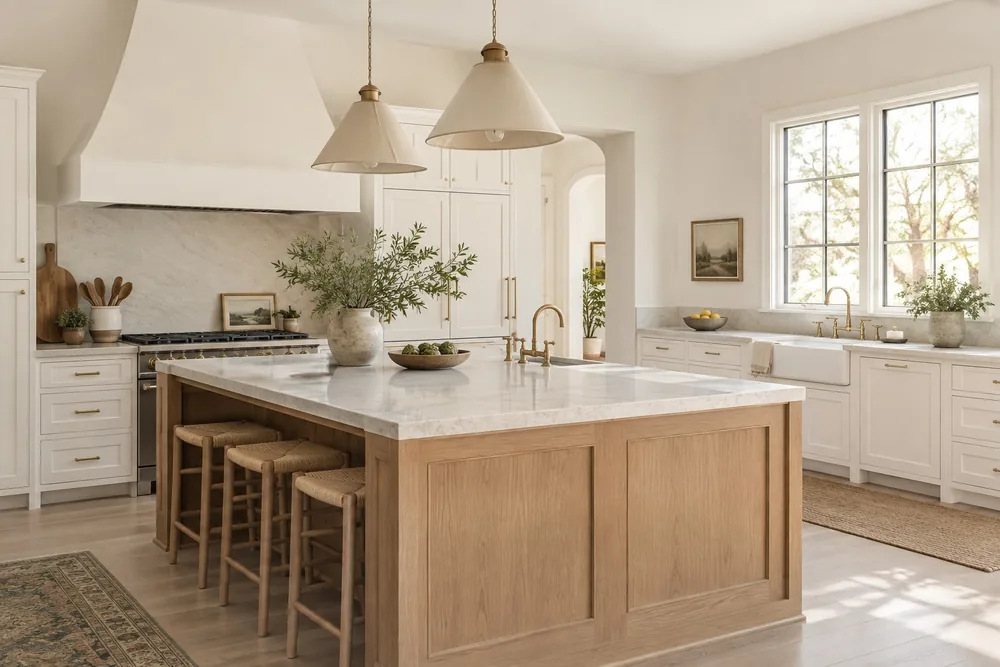
A sandy neutral rather than white paint
White Sand is a muted beige despite its white name. The useful starting point for this review is pale stone and oatmeal fabric. This is a proposal for assessing the color, not a claim that it has been tested in your home. The White Sand OC-10 manufacturer reference supplies the color identity and published specifications.
White Sand is a beige color despite its name, so visible neutral warmth belongs in the expectation.
Compare it against a white trim sample so the amount of beige is an intentional part of the scheme.
Plan how much of the room should carry White Sand with paintcolorvisualizer.com, keeping pale stone and oatmeal fabric visible in the scene. Compare the main wall, trim and cabinet areas before buying samples, and use the physical boards to approve the color.
The deciding edge: pale stone and oatmeal fabric
Oatmeal fabric and pale stone can form a low-contrast palette; a white trim sample helps establish how much definition remains.
Use White Sand and Natural Cream to clarify the material choice against pale stone and oatmeal fabric. Keep the sample edges touching the fixed material, and cover one color before judging the other. Near-neutrals can look noticeably different side by side; the final choice still needs to work on its own. Record the specific relationship you prefer, such as a clearer trim outline or a quieter connection to the floor.
The color reference at Coloraw White Sand OC-10 can help organize the undertone questions for White Sand. For this review, the practical check is the relationship with pale stone and oatmeal fabric; the digital reference does not replace that material comparison.
What White Sand OC-10 actually brings to the palette
White Sand is a beige color despite its name, so visible neutral warmth belongs in the expectation.
Use Benjamin Moore and the complete code OC-10 when ordering a sample. The working question is a sandy neutral rather than white paint. A broad family name cannot settle the relationship with pale stone and oatmeal fabric.
Use the lighting reference on Paintuma White Sand OC-10 to plan which appearances to check, then move the White Sand sample through your own daylight and evening conditions. The aim is to evaluate a sandy neutral rather than white paint, not to treat a rendered scene as a measured result.
Digital reference · LRV 66.95
Digital reference · LRV 64.78
Digital reference · LRV 63.24
A palette with White Sand in a defined role
The manufacturer's coordinating suggestions include Swiss Coffee OC-45, Audubon Russet HC-51 and Hush AF-95. These are separate named colors to sample, not interchangeable formulas. For the material direction considered here—pale stone and oatmeal fabric—choose which surface each candidate would occupy before deciding that the whole set belongs in the room.
Choose the main painted surface before assigning trim and accent colors. In the pale stone and oatmeal fabric direction, let the largest fixed surface set the constraint. Compare unequal sample areas that reflect the intended room, rather than assuming three equal paint chips describe the finished balance.
White Sand, Natural Cream or Manchester Tan?
White Sand has an LRV of 66.95; Benjamin Moore Natural Cream OC-14 is 64.78. The difference is 2.17 points, with White Sand returning more light under the reference measurement.
Benjamin Moore Manchester Tan HC-81 provides another reference at LRV 63.24. These are separate colors to compare, not promised formula matches. Keep the samples at equal size and orientation, then cover each alternative in turn so the preferred paint is also judged alone.
| Color | Brand / code | LRV |
|---|---|---|
| White Sand | Benjamin Moore OC-10 | 66.95 |
| Natural Cream | Benjamin Moore OC-14 | 64.78 |
| Manchester Tan | Benjamin Moore HC-81 | 63.24 |
LRV 66.95: the light question for White Sand
The 66.95 LRV makes White Sand a relatively light option, though it is not a guarantee of a white-looking wall. A darker comparison can make it seem paler, while a brighter white can reveal more of its color. Judge it beside pale stone and oatmeal fabric, which supplies the room's real context.
Check the window wall, a shaded return and the room under its usual lamps. Keep pale stone and oatmeal fabric together as you move the sample. Record which relationship changes; a different phone exposure is not evidence that the paint will behave differently.
The final sample decision for White Sand
Compare it against a white trim sample so the amount of beige is an intentional part of the scheme.
Label the board Benjamin Moore White Sand OC-10, apply and dry it according to the product directions, and approve it in the intended finish. Keep the failed condition in your notes as well as the successful view. Color choice does not specify cabinet preparation, bathroom suitability or an exterior coating system. The paint color visualizer roundup compares tools for planning the painted areas before the physical trial.
Sources & notes
This guide reviews published color information and proposes practical sample checks. It does not claim first-hand paint testing or customer-review scores. Benjamin Moore does not sponsor or endorse this site. Product names and trademarks belong to their respective owners. Confirm the color in a physical sample and select the coating for the actual surface and finish.